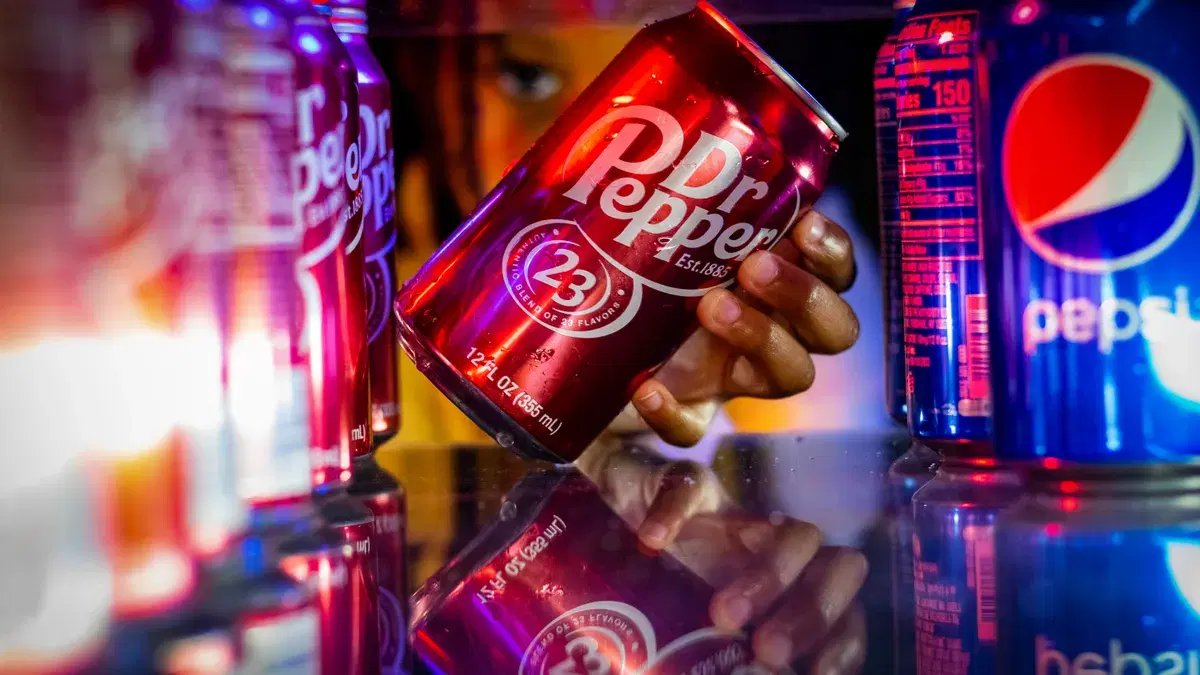
Dr Pepper Zero Sugar and Diet Dr Pepper both provide zero calories, zero sugar, and 41 mg of caffeine per can. Diet Dr Pepper uses aspartame alone for a lighter, crisp finish. Dr Pepper Zero Sugar blends aspartame with acesulfame potassium to closely recreate the fuller flavor of regular Dr Pepper.
Key takeaways:
- Sweetener systems: Diet Dr Pepper uses aspartame alone, whereas Dr Pepper Zero Sugar uses a blend of aspartame and acesulfame potassium.
- Flavor profile: The dual-sweetener blend in Dr Pepper Zero Sugar masks lingering aftertastes and mimics the standard 23-flavor recipe more accurately.
- Nutritional baseline: Both beverages contain zero calories, zero carbohydrates, and zero grams of sugar per serving according to official Keurig Dr Pepper product facts.
- Caffeine content: Both varieties provide matching caffeine levels per standard 12 fl oz can (41 mg).
- Mandatory warnings: Because both formulas use aspartame, each carries the required warning for individuals with Phenylketonuria (PKU).
Which Soda Wins the Quick Taste and Formula Verdict?
If you prefer a soda that tastes nearly indistinguishable from full-sugar original Dr Pepper, choose Dr Pepper Zero Sugar. The combination of aspartame and acesulfame potassium creates a fuller sweetness curve with less bitter aftertaste, mimicking the body of high fructose corn syrup.
If you prefer a lighter, crisp beverage with the familiar taste profile of traditional diet soft drinks from recent decades, stick with Diet Dr Pepper. It remains one of the most popular single-sweetener sodas on the market, offering the classic 23-flavor blend with a distinctly clean finish.
This distinction mirrors broader industry shifts seen in comparisons like Coke Zero Sugar vs Diet Coke: Ingredients and Caffeine and Pepsi Zero Sugar vs Diet Pepsi: Ingredients and Caffeine, where modern zero-sugar lines use multi-sweetener blends to recreate flagship flavors.
How Do the Nutrition and Ingredients Compare Side-by-Side?
According to official manufacturer listings on the Diet Dr Pepper 12 fl oz Product Facts page and the Dr Pepper Zero Sugar 355 mL Product Facts sheet, both formulations share nearly identical core nutritional facts. Below is a side-by-side comparison of a standard 12 fluid ounce (355 mL) serving:
| Feature / Ingredient | Diet Dr Pepper | Dr Pepper Zero Sugar |
|---|
| Calories | 0 | 0 |
| Total Fat | 0 g | 0 g |
| Total Carbohydrates | 0 g | 0 g |
| Total Sugars | 0 g | 0 g |
| Protein | 0 g | 0 g |
| Primary Sweeteners | Aspartame (E951) | Aspartame (E951) + Acesulfame Potassium (E950) |
| Caffeine (12 fl oz) | 41 mg | 41 mg |
| Acid Blend | Phosphoric Acid | Phosphoric Acid |
| Preservative | Sodium Benzoate | Sodium Benzoate |
| Sodium Phosphate | No | Yes |
| PKU Warning | Yes (contains phenylalanine) | Yes (contains phenylalanine) |
| Launch Year | 1962 (reformulated 1991) | 2021 |
How Do the Sweetener Systems Differ in Chemistry and Taste?
The fundamental difference between these two zero-calorie beverages is how they approach artificial sweetness. Sweetener chemistry plays a direct role in how receptors on the tongue perceive sweetness onset, intensity, and duration.
Diet Dr Pepper relies entirely on aspartame (E951). Aspartame is approximately 200 times sweeter than sucrose (table sugar). It provides a clean sweetness onset, but its intensity fades relatively quickly, occasionally leaving a faint, lingering acidity or mild metallic note once swallowed.
Dr Pepper Zero Sugar, introduced in 2021, uses a synergistic blend of aspartame (E951) and acesulfame potassium (Ace-K, E950). Ace-K is also roughly 200 times sweeter than sucrose, but it has a faster sweetness onset and can have a slightly bitter aftertaste when used in isolation. However, food scientists have long demonstrated that combining aspartame and Ace-K creates a complementary effect:
- The fast-acting sweetness of Ace-K (E950) hits the palate instantly.
- The mid-palate sweetness of aspartame (E951) sustains the flavor through the middle of the sip.
- The two compounds mask each other's individual bitter aftertastes, resulting in a sweetness curve that closely models real sugar.
Both sweeteners are reviewed and permitted under regulatory frameworks detailed in the FDA guidance on Aspartame and Other Sweeteners in Food as well as general standards for High-Intensity Sweeteners.
Do Caffeine and Carbonation Levels Differ Between the Two?
Many consumers wonder if switching between Diet Dr Pepper and Dr Pepper Zero Sugar changes their daily caffeine intake. According to official Keurig Dr Pepper product disclosures, both beverages contain the exact same amount of caffeine per serving:
- 12 fl oz (355 mL) can: 41 mg of caffeine
- 20 fl oz bottle: approximately 68 mg of caffeine
For reference, this 41 mg level is slightly higher than standard Coca-Cola (which contains 34 mg per 12 fl oz) and slightly lower than Diet Coke (which contains 46 mg per 12 fl oz). It is also significantly lower than an 8-ounce cup of brewed coffee, which typically contains 80 to 100 mg of caffeine. If you are comparing caffeine levels across other brand families, similar dynamics apply, as outlined in our analysis of Coca-Cola Light vs. Coca-Cola: Ingredients Compared.
In terms of carbonation and mouthfeel, both drinks utilize carbonated water and phosphoric acid to provide the characteristic bite and preserve freshness. However, Dr Pepper Zero Sugar often feels slightly denser or more viscous on the tongue due to the flavor emulsion used to deliver its full-bodied profile.
Why Does Zero Sugar Taste Closer to Regular Dr Pepper?
The original Dr Pepper formula is famous for its proprietary blend of 23 distinct flavors, including hints of cherry, vanilla, caramel, amaretto, blackberry, and subtle spices. Translating these intricate flavor notes into a zero-calorie format requires careful formulation.
In Diet Dr Pepper, the lightness of single-sweetener aspartame allows the fruit and acid notes to come forward quickly, resulting in a crisp, slightly sharper flavor. For decades, this profile was celebrated as the gold standard of diet sodas because it tasted fuller than traditional diet colas.
Dr Pepper Zero Sugar, by contrast, targets modern consumer expectations for near-identical flavor matching. Because the aspartame and Ace-K blend provides a rounder sweetness across the entire palate, the deeper, spiced caramel and dark fruit notes from the 23-flavor concentrate remain prominent throughout the entire sip. The result is a drink that feels less like a diet alternative and more like original regular Dr Pepper.
What Health Warnings and Additives Are Listed on the Labels?
When reading the nutrition facts panel and ingredient statement on either beverage, consumers will notice several specific regulatory declarations and additive listings.
Phenylketonuria (PKU) Notice
Both Diet Dr Pepper and Dr Pepper Zero Sugar carry the prominent label warning: "PHENYLKETONURICS: CONTAINS PHENYLALANINE". This warning is required by food regulators because aspartame breaks down during digestion into aspartic acid, methanol, and the amino acid phenylalanine. Individuals born with phenylketonuria (PKU), a rare genetic metabolic condition, cannot properly metabolize phenylalanine, leading to potentially dangerous systemic accumulation. Anyone diagnosed with PKU must strictly avoid both products.
Other Functional Ingredients
Beyond sweeteners and caffeine, both products contain a small group of standard food additives:
- Phosphoric Acid: Added in both to control acidity and provide a sharp, tangy bite. Dr Pepper Zero Sugar additionally lists sodium phosphate, which Diet Dr Pepper does not.
- Caramel Color: Provides the signature dark brown appearance.
- Sodium Benzoate: Added in minor amounts as a preservative to protect flavor freshness and prevent microbial spoilage, in line with official Keurig Dr Pepper formulations.
- Natural and Artificial Flavors: The proprietary 23-flavor blend responsible for the hallmark Dr Pepper profile.
Which Should You Pick for Your Taste Preferences?
Choosing between Diet Dr Pepper and Dr Pepper Zero Sugar comes down to personal taste preferences, as their calorie, carbohydrate, and caffeine impacts are identical.
Choose Diet Dr Pepper if:
- You have enjoyed the established flavor profile of Diet Dr Pepper for years and appreciate its crisp, light finish.
- You prefer a beverage where the fruity, bright notes of the 23-flavor blend stand out with less lingering sweetness.
- You want a straightforward single-sweetener formulation using only aspartame (E951).
Choose Dr Pepper Zero Sugar if:
- You are transitioning away from regular full-sugar Dr Pepper and want the closest possible taste match.
- You dislike the traditional "diet soda aftertaste" associated with aspartame-only formulas.
- You prefer a deeper, more syrupy mouthfeel and stronger caramel-spice undertones.
Limitations and Evidence Context: While established regulatory bodies such as the FDA and EFSA have established safe daily intake levels for aspartame and acesulfame potassium, scientific evidence cannot determine individual gastrointestinal tolerance, personal taste sensitivity, or long-term metabolic responses across all unstudied sub-populations. Always consult your healthcare provider regarding specific dietary conditions or sensitivities.